
Dolts and Thugs and Artists All
“They were dolts and thugs for the most part, huge pieces of meat, trained to a fine edge—but somehow they mastered those complex plays and patterns, and in rare moments they were artists.”
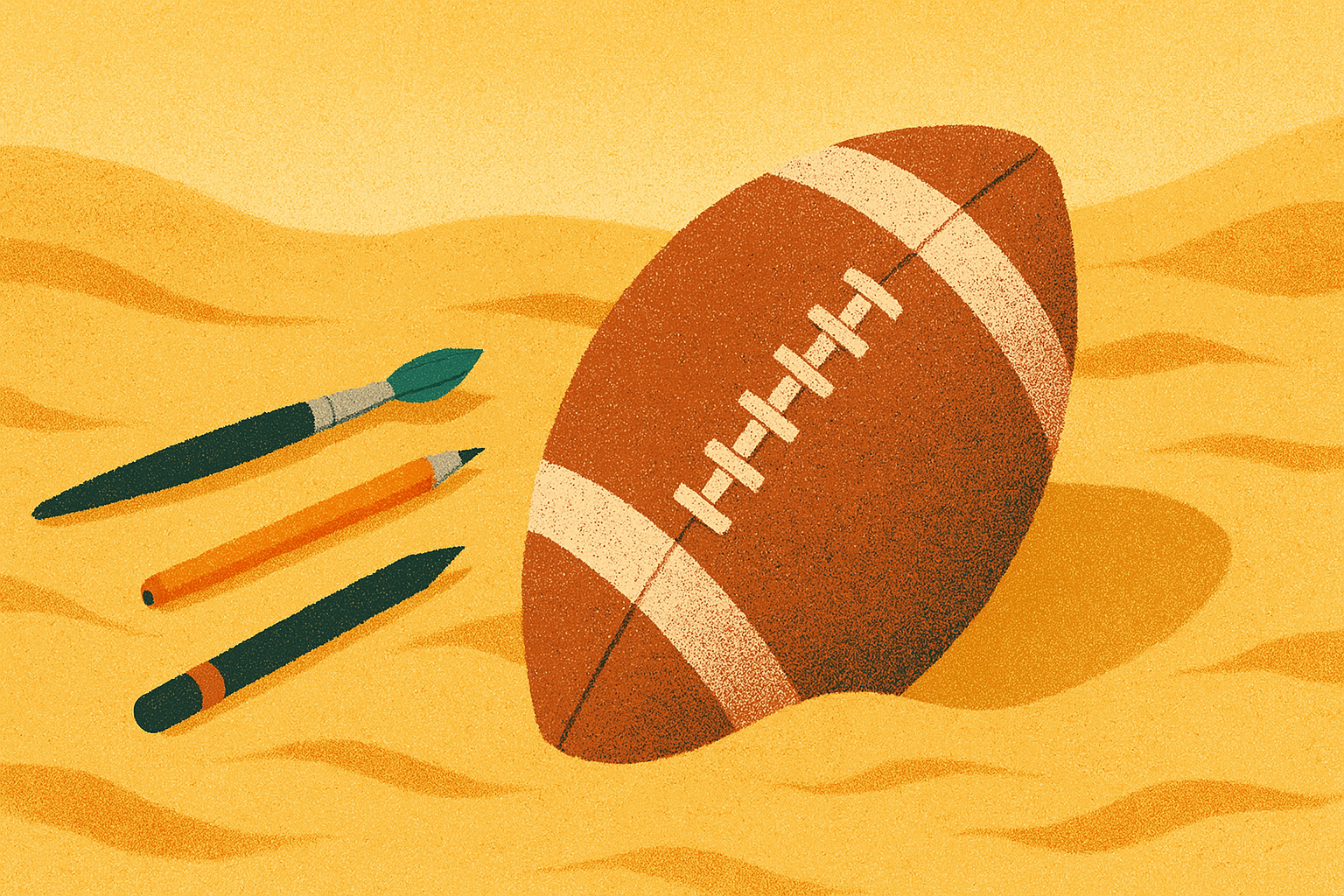
This passage in The Rum Diary is from a scene where Thompson finds himself on a Caribbean beach, tossing a coconut back and forth like it’s a football. What begins as a diversion quickly turns into something more; a ritual, a reenactment of Saturdays past, when football carried a certain gravity. He remembers the college backfields, the roar of the stands, the way plays unfolded with punishing precision.
Even in a brutal game, even among men who might never call themselves creative, artistry found its way through. The patterns, the timing, the sheer coordination, all formed into a form of artistic expression, fleeting but undeniable.
The tragedy, though, is that it ends. Bodies wear down. The game becomes juvenile past a certain age, unless you’re one of the lucky few paid to keep playing. And so the artistry ends too, tucked away with memories of youth.
I think about how that mirrors so much of what’s happening in America today, especially among men. We grow up with outlets: sports, music, drawing, skateboarding, tinkering. Things that let us experiment with expression, with creation. But somewhere along the way, most of us are told to pack it in. Sports are for kids. Music won’t pay the bills. Art isn’t practical. And so we stop.
But here’s the problem: the artist in us doesn’t die. It goes dormant. It festers. And without a way to channel that instinct to create, to bring something new into the world, it can curdle into frustration, anger, even despair.
You can see it in the “crises” that dominate headlines: declining mental health, rising extremism, the aimlessness of young men. On the surface, it looks like politics, economics, social media. And it is, partly. But underneath, I think it’s also about a loss of connection to that artistic core. The part of us that longs to build, to express, to shape something that didn’t exist before.
Football is just one example. It gave men a socially sanctioned way to be artists; within a violent, rule-bound framework, yes, but still. When that ends, too many don’t find another canvas. The rituals of creation stop. And the void gets filled with consumption, distraction, or worse.
What if we saw ourselves first and foremost as artists, not in the narrow sense of painting or poetry, but in the broader truth that to be human is to create? To make meals, gardens, furniture, businesses, photographs, murals, even blog posts. To put something into the world that reflects a piece of us.
Thompson’s football players had their fleeting moments of artistry, but they were trapped in a system that didn’t let them carry it forward once their bodies gave out. We don’t have to make the same mistake. The crisis we face isn’t just political or economic. It’s spiritual. It’s the quiet loss of people seeing themselves as makers. And the only real answer is to reclaim it. To give ourselves permission to keep creating, no matter our age, no matter our role, no matter whether the world thinks it counts.