
Ghost Cities
I read a post recently by Seth Godin titled Living in Ghost Cities; a metaphor about the digital spaces that promise connection but leave us feeling empty. As I turned it over in my mind, I realized the reverse is also happening: real physical cities are losing their souls, becoming ghosted by the very commerce that was supposed to bring them life.
In the various neighborhoods of Miami, I can see it: formerly eclectic and distinct areas replaced by shiny storefronts with the same brands. The rich and the corporate consolidate everything in the interest of scaling. Profit becomes the only story. What gets squeezed out is texture, spontaneity, the human edge.
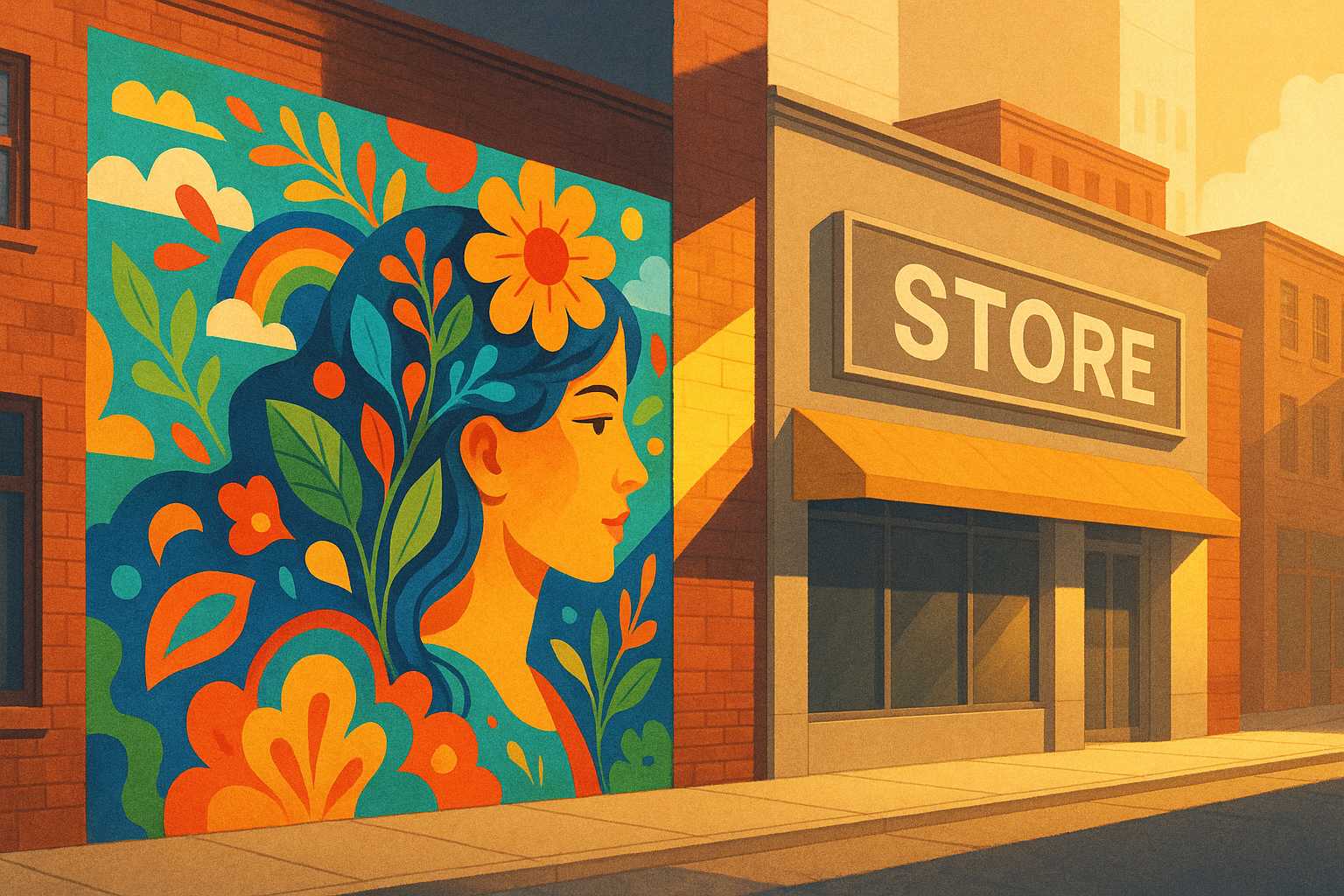
But there are still holdouts. Little corners where someone opens a storefront late, someone paints a wall because it matters, someone stays even when easier paths exist. These are the living souls of a city. They’re the people, the details, the moments that feel like home.
What if our creative work, our community building, our art is one way to reclaim those souls? Not by wholesale rejecting commerce, because cities need business, but by insisting the narrative includes more than efficiency. By asking: who gets seen? Who gets left out? What stories get told? What surfaces become canvases, not just billboards?
We tend to measure progress in numbers, growth, expansion. But maybe vitality isn’t in the volume, it’s in the resonance. Ghost cities aren’t necessarily the ones with empty windows, but the ones that lost what makes windows worth looking through.
If we care about place, about the living, breathing texture of city life, then our role is both witness and participant. We show up. We connect. We paint the walls. We gather the stories. And we resist the erasure of the specific, personal, indispensable human story.