
Capitalism’s Boogeyman
It just occurred to me why communism and socialism have always been painted as the ultimate boogeyman in the land of capitalist religion (that’s us, in case it’s not clear). These systems require faith—faith that the people running the show are genuinely serving the greater good, alongside everyone else participating.
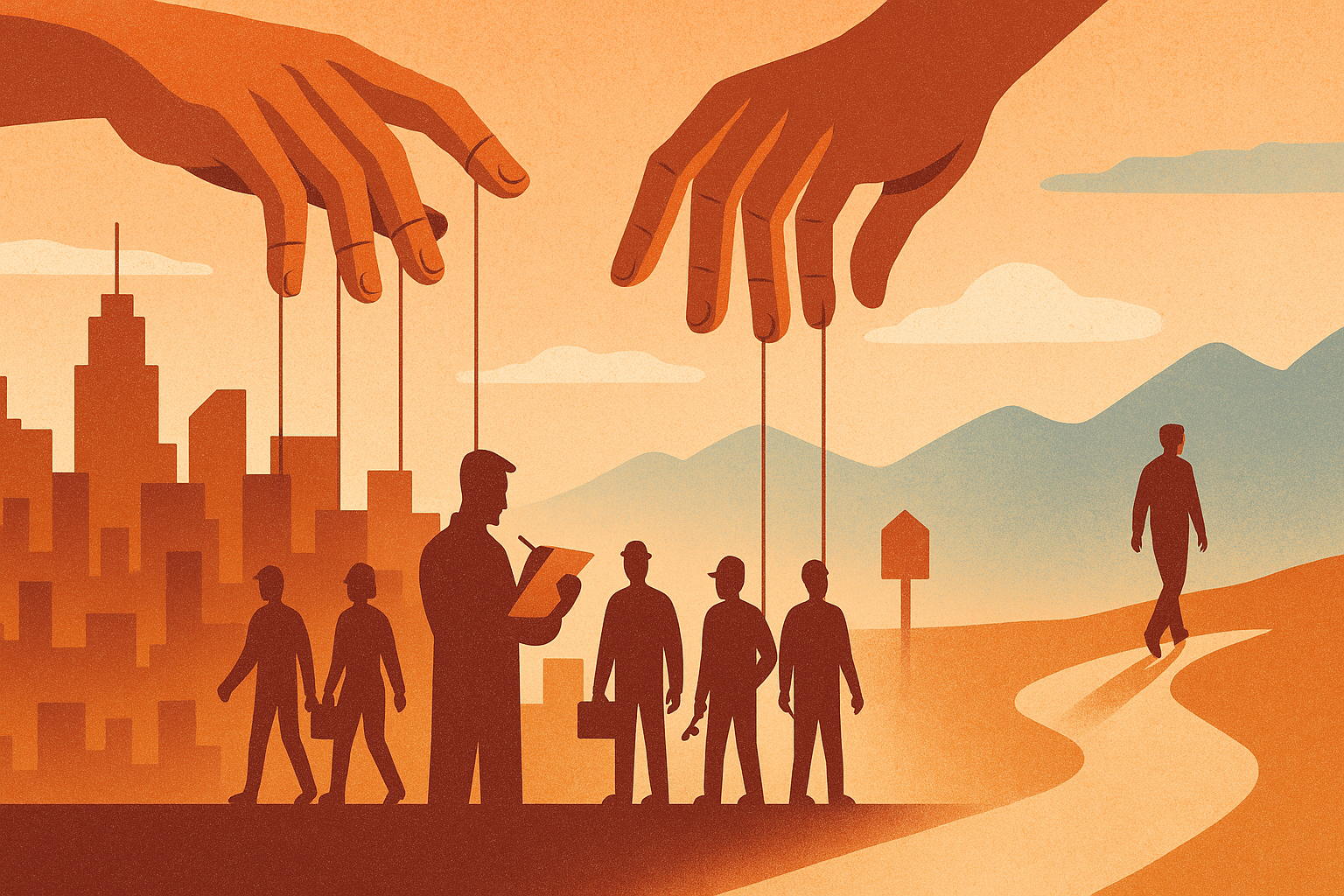
The trouble is, the people historically in power—industrialists, titans of industry, CEOs—cannot fathom a person with any amount of power not abusing it. Not twisting it to serve their own greed. And unfortunately, history hasn’t proven them entirely wrong. Most examples we have of socialist or communist societies are as bad, or worse, than our own land of the “free.” Of course, you could argue that many of those systems were twisted from the inside out by the meddling hands of capitalist leaders, stirring the pot to make sure they failed.
On the flip side, I’ve always had a bone to pick with the extreme right—or at least the libertarian set that anoints Ayn Rand as their messiah. I read Atlas Shrugged in college, cover to cover (no SparkNotes). I even reread it in my late twenties, skimming a few of the more long-winded sections. To me, the irony is almost too thick: everyone in today’s political sandbox—whether actual politicians or the uber-rich pulling levers from behind the curtain—are the spitting image of the “moochers” and “leeches” Rand so despised in her novel.
They’re not the heroes who disappeared into Galt’s Gulch to create a more equitable society built on earned merit. They’re the corrupt gatekeepers she warned against, obsessed with self-preservation and extracting value from everyone else. The tragedy is that Atlas Shrugged is such a long and at times dry read that not enough people make it through to develop a contradictory take. The result? A cultural echo chamber where Rand is quoted endlessly but rarely challenged with the nuance she ironically demands of her readers.