
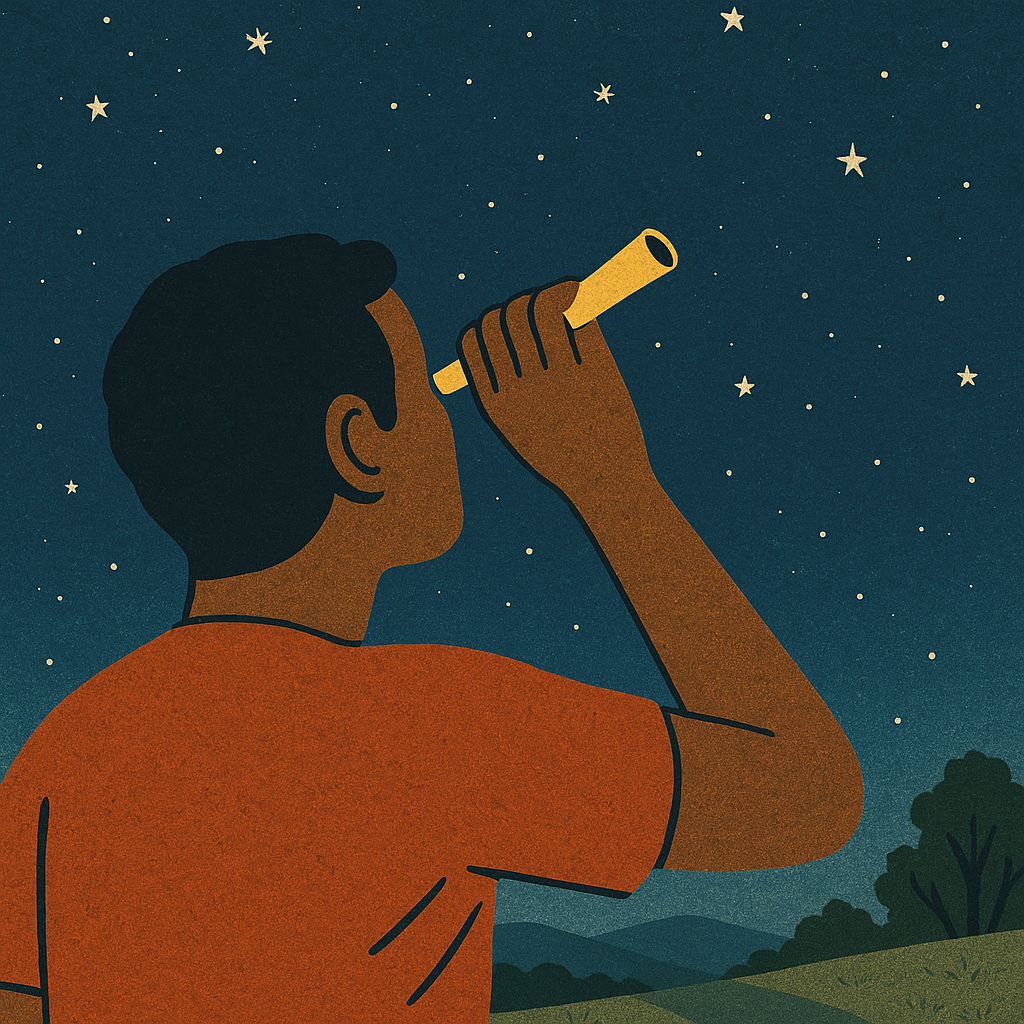
Put Down Your Straw
I was reading Sharon Salzberg’s book Faith when I first encountered the Buddhist analogy about holding fixed beliefs as gazing at the sky through a straw. The sky represents the unobstructed truth of who we are and what our lives are about. When our belief systems circumscribe that truth, we’re looking through a narrow tube, seeing only a very small part while convinced we’re seeing the whole.
When we’re attached to our beliefs, we spend time comparing straws. “I’ve got a better straw than you. It’s wider and it’s got a design on it.” Especially when we’re afraid, we hold onto our straws with a death grip. This analogy opened my mind to the need for letting go of ideas we were taught about what things mean and what we were taught to think they mean about us. It’s an opportunity to embrace the unknown about ourselves and get to know who we really are.
I see this everywhere. In political conversations where people talk past each other. In relationships where we’re more interested in being right than being connected. In the way I sometimes catch myself defending positions I’m not even sure I believe anymore, just because they’ve become part of my identity.
When we hold a belief too tightly, it’s often because we’re afraid. We become rigid, chastising others for believing the wrong things without really listening to what they’re saying. We resist opening our minds to new perspectives. The mind’s determination to see things a certain way transforms fear into hostility.
Beliefs try to make a known out of the unknown. They make presumptions about what’s coming, how it will be, what it will mean. But faith, Salzberg writes, doesn’t carve out reality according to our preconceptions. Faith doesn’t decide how we’re going to perceive something but is the ability to move forward even without knowing.
While beliefs come from outside, from other people or traditions, faith comes from within, from our participation in the process of discovery. As Alan Watts put it: “Belief clings, faith lets go.”
When we have the courage to put down the straw and view the sky as it is, vast and unimpeded, we can recognize the varied perspectives each straw gives us. We can see the difference between our favorite straw, our most accustomed straw, our exquisitely preserved straw, and the sky itself.
The goal isn’t to never pick up a straw again (that would be borderline impossible). It’s to be aware when we’re holding our straws and to do so skillfully, knowing we can put them down sometimes and look nakedly at the sky. When we claim our right to question everything, including our beliefs, we can unhook from our dependence on what’s familiar and let in something more open and alive.